Creatine: Beyond Muscle – What the Latest Research Really Says
Discover the latest research on creatine, brain health, muscle growth, safety, and whether 5g or 10g daily is right for you.
By
November 10, 2026

Is 5 grams still enough? What about brain health, aging, and the growing conversation around higher doses?
If you've spent any time following fitness or nutrition conversations lately, you've probably noticed something: everyone seems to be talking about creatine.
And not just bodybuilders or competitive athletes.
Creatine is now being discussed in connection with brain health, memory, healthy aging, and overall wellness. Some experts are even suggesting that the traditional 5-gram daily recommendation may not be enough to unlock all its potential benefits.
So, what's changed? Is this genuinely new science, or just another supplement trend getting a little ahead of itself?
Let's break it down.
Creatine is a naturally occurring compound that helps your body produce energy.
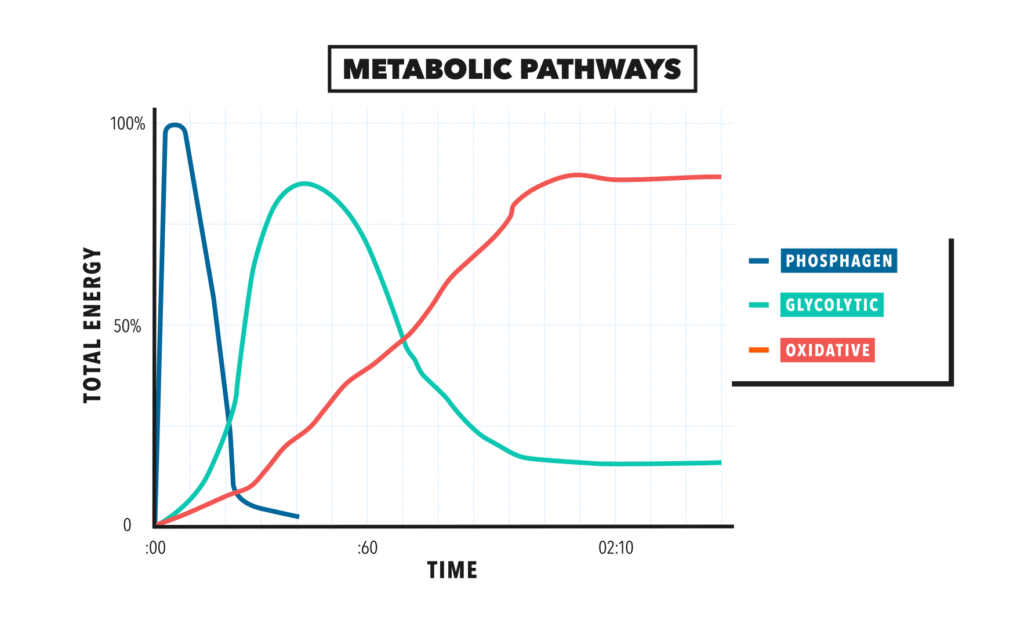
Your body makes creatine on its own, and you also get small amounts from foods like meat and fish. Most of your body's creatine is stored in your muscles, where it helps replenish ATP (adenosine triphosphate), the primary energy source your cells use.
Think of ATP as your body's rechargeable battery.
During short bursts of intense activity, your muscles use ATP quickly. Creatine helps recharge that battery so you can continue producing high levels of effort.
If you've ever pushed through a heavy set of squats, sprinted through a workout, or tried to squeeze out a few more reps before the clock ran out, you've relied on this energy system.
And that's why creatine has been a staple in sports nutrition for decades.
Before exploring the exciting new research, it's worth recognizing what science has consistently demonstrated.
Creatine monohydrate is one of the most extensively studied sports supplements available.
Research supports several benefits, particularly when combined with regular resistance training:
Improved strength and power: Creatine can help support performance during heavy lifting and explosive movements.
Better repeated high-intensity performance: It can help athletes maintain output across repeated hard efforts.
Increased lean body mass: When combined with resistance training, creatine can support gains in muscle mass over time.
Greater training capacity: Being able to perform a little more quality work during training can contribute to long-term progress.
For CrossFit athletes, these benefits are especially relevant.
Our training combines strength, power, conditioning, and repeated high-intensity efforts. Creatine isn't going to magically improve every aspect of your fitness, but it can support some of the energy systems we regularly challenge.
And importantly, these benefits aren't reserved for elite athletes.
Someone in their 50s working to maintain strength and independence may have just as much reason to be interested in creatine as someone chasing a new personal record.
Here's where things get interesting.
Researchers have been exploring whether creatine's role in cellular energy production extends beyond skeletal muscle.
After all, your brain needs energy, too.
In fact, the brain is one of the body's most energy-demanding organs. That has led scientists to investigate whether increasing creatine availability might support cognitive performance, particularly when the brain is under stress.
Creatine and Brain Health
Some research suggests creatine supplementation may benefit certain aspects of cognitive function, including memory and information processing.
A 2024 systematic review and meta-analysis involving 16 randomized controlled trials found improvements in some measures of memory, attention time, and processing speed.
However, the same analysis did not find significant improvements in overall cognitive function or executive function.
Other reviews have reported mixed results.
That's an important distinction.
Creatine shows promise for brain health, but we don't yet have enough evidence to say that everyone should take it to improve memory, focus, or mental clarity.
Another area receiving attention is creatine's potential effect on cognitive performance when we're short on sleep.
Early research suggests that creatine may help support certain aspects of brain energy metabolism during sleep deprivation.
But these studies are generally small, and some have used doses substantially higher than the traditional daily recommendation.
It's fascinating research, but it's not a reason to trade a good night's sleep for another scoop of creatine.
Sleep remains one of the most important tools we have for recovery, physical performance, and long-term health.
This may be one of the most practical reasons for everyday adults to pay attention.
As we age, maintaining muscle mass, strength, and physical function becomei ncreasingly important.
Resistance training remains a cornerstone of healthy aging, and research suggests creatine can provide additional benefits when paired with that training.
Scientists are also investigating whether creatine might support cognitive health in older adults.
A 2026 systematic review found encouraging associations between creatine and certain cognitive measures, but the authors emphasized that larger, higher-quality clinical trials are needed.
The takeaway?
Creatine's established benefits for muscle and strength already make it worth discussing in the context of healthy aging. Its potential benefits for brain health could make that conversation even more interesting in the years ahead.
This is probably where the most confusion exists right now.
For years, the standard recommendation has been approximately 3–5 grams of creatine monohydrate per day.
That recommendation hasn't suddenly become outdated.
For most healthy adults looking to improve strength, muscle mass, and high-intensity exercise performance, 3–5 grams daily remains a well-supported approach.
So why are some people recommending 10–15 grams?
Part of the discussion comes from emerging research into brain creatine levels and other potential benefits beyond muscle performance.
Researchers are exploring whether higher doses, longer supplementation periods, or different dosing strategies might be needed to meaningfully increase creatine levels in the brain.
But here's the key point:
A higher dose being studied doesn't automatically mean a higher dose is better for everyone.
In November 2026, the Council for Responsible Nutrition announced an updated scientific safety assessment examining 162 clinical studies involving creatine monohydrate.
The review supported increasing its highest observed intake level from 5 grams to 10 grams per day for adults.
That's encouraging news about creatine's safety profile.
However, this was a supplement-industry-funded safety assessment, not a clinical trial demonstrating that 10 grams produces better results than 5 grams.
And it certainly doesn't establish that everyone should begin taking 15 grams daily.
The difference between what appears safe and what has been proven beneficial matters.
Daily Amount - What the Research Tells Us
3–5 grams: Well-established maintenance range for most healthy adults seeking exercise-related benefits.
10 grams: Studied in research and supported by a recent safety assessment, but not established as a superior daily dose for everyone.
15+ grams: Used in certain research protocols, but evidence doesn't support a universal long-term recommendation at this level.
Some studies also use a short-term loading phase of approximately 20 grams per day, divided into smaller doses, followed by a lower maintenance dose.
Loading can help saturate muscle creatine stores more quickly, but it isn't required.
Taking a consistent daily maintenance dose can accomplish the same goal over a longer period.
Our perspective? Don't increase your dose simply because someone on social media says 5 grams isn't enough anymore.
The right approach depends on your goals, health history, and what the research actually supports.
For healthy adults, creatine monohydrate has a strong safety record when used appropriately.
Still, a few common questions deserve clarification.
Does creatine damage your kidneys?
Research in healthy adults has not demonstrated that recommended creatine supplementation causes kidney damage. However, anyone with kidney disease, abnormal kidney function, or relevant medical concerns should consult their healthcare provider before supplementing.
Creatine can also affect blood creatinine measurements, which are commonly used to estimate kidney function. If you're having bloodwork done, make sure your healthcare provider knows you're taking it.
Does creatine cause water retention?
Yes, creatine can increase water stored within your muscles.
This may cause an initial increase on the scale, but that doesn't mean you've gained body fat.
Does creatine cause dehydration or muscle cramps?
Controlled research hasn't consistently supported the popular belief that creatine causes dehydration or cramping.
That said, proper hydration still matters, especially during challenging workouts.
Are there side effects?
Some people experience bloating or gastrointestinal discomfort, particularly with larger doses.
Taking smaller amounts and avoiding unnecessary high-dose supplementation may help.
Walk into a supplement store and you'll find all kinds of options.
Creatine hydrochloride. Buffered creatine. Creatine blends. Products promising superior absorption or fewer side effects.
But the evidence remains pretty straightforward.
Creatine monohydrate is the most extensively researched form, and other versions haven't consistently demonstrated superior benefits.
It's also widely available and generally affordable.
You don't need the most expensive product on the shelf.
Look for a reputable manufacturer, ideally one that uses independent third-party testing to verify product quality.
Should I take creatine every day, even when I don't work out?
Yes. Creatine works by gradually increasing and maintaining creatine stores in your muscles. Consistency matters more than taking it immediately before or after a workout.
Do I need to cycle on and off creatine?
There's no established need for healthy adults to cycle creatine to maintain its effectiveness.
Can women benefit from creatine?
Absolutely. Creatine isn't just for men or competitive athletes. Women can benefit from its established effects on strength and high-intensity performance, and researchers are continuing to investigate its potential applications across different stages of life.
Will creatine make me bulky?
Creatine doesn't automatically create large muscles. Muscle growth depends on training, nutrition, genetics, and other factors. Some initial weight gain may come from increased water stored in muscle.
Is creatine useful if I'm over 40 or 50?
It certainly can be. Maintaining strength and muscle function becomes increasingly important with age. Creatine, particularly alongside resistance training, may help support those goals.
Should I switch from 5 grams to 10 grams daily?
Not necessarily. Five grams remains a well-supported daily dose for many adults. While higher doses are being studied, we don't yet have sufficient evidence that doubling your dose provides meaningful additional benefits for everyone.
At CrossFit Rockland, we're interested in anything that can help our members become stronger, healthier, and more capable—not just today, but for years to come.
Creatine is one of the most researched supplements available, and the science surrounding it continues to evolve.
Its benefits for strength and high-intensity exercise performance are well established. Its potential role in brain health and healthy aging is exciting, but there's still plenty to learn.
And while higher doses are receiving attention, more isn't automatically better.
For most healthy adults, 3–5 grams of creatine monohydrate daily remains a sensible, research-supported starting point.
But remember: supplements are exactly that—supplements.
They work best alongside the fundamentals that have always mattered: consistent training, quality nutrition, adequate sleep, and recovery.
The goal isn't simply to perform better in your next workout. It's to build a stronger, healthier body for the long run.
And that's something we'll always stand behind at CrossFit Rockland.
This article is for educational purposes only and is not intended to replace individualized medical advice. Consult your healthcare provider before beginning or changing supplementation, particularly if you have an existing medical condition, take medications, or are pregnant or breastfeeding.
For those interested in exploring the science behind creatine supplementation, the following resources provide additional information on its benefits, dosing, safety, and emerging research.
1. National Institutes of Health (NIH) — Exercise and Athletic Performance
Overview of creatine supplementation, including its effects on strength, exercise performance, recommended dosing, and safety.
https://ods.od.nih.gov/factsheets/ExerciseAndAthleticPerformance-HealthProfessional/
2. Creatine Supplementation and Cognitive Function: A Systematic Review and Meta-Analysis (2024)
Review of 16 randomized controlled trials examining creatine's potential effects on memory, attention, processing speed, and cognitive performance.
https://pubmed.ncbi.nlm.nih.gov/39070254/
3. Creatine Supplementation and Cognitive Function in Older Adults: A Systematic Review (2026)
Examination of emerging research into creatine's potential role in supporting cognitive health during aging.
https://pubmed.ncbi.nlm.nih.gov/40971619/
4. Creatine Supplementation and Cognitive Performance: Review of Current Evidence (2024)
Additional research exploring creatine's potential cognitive benefits and the limitations of existing studies.
https://pubmed.ncbi.nlm.nih.gov/38582412/
5. Council for Responsible Nutrition — Updated Creatine Safety Assessment (November 2026)
Review of 162 clinical studies supporting a highest observed intake level of 10 grams per day in adults. This industry-funded safety assessment does not establish that higher doses provide superior benefits.
https://www.crnusa.org/newsroom/new-crn-foundation-review-reaffirms-creatine-safety-backed-decades-research